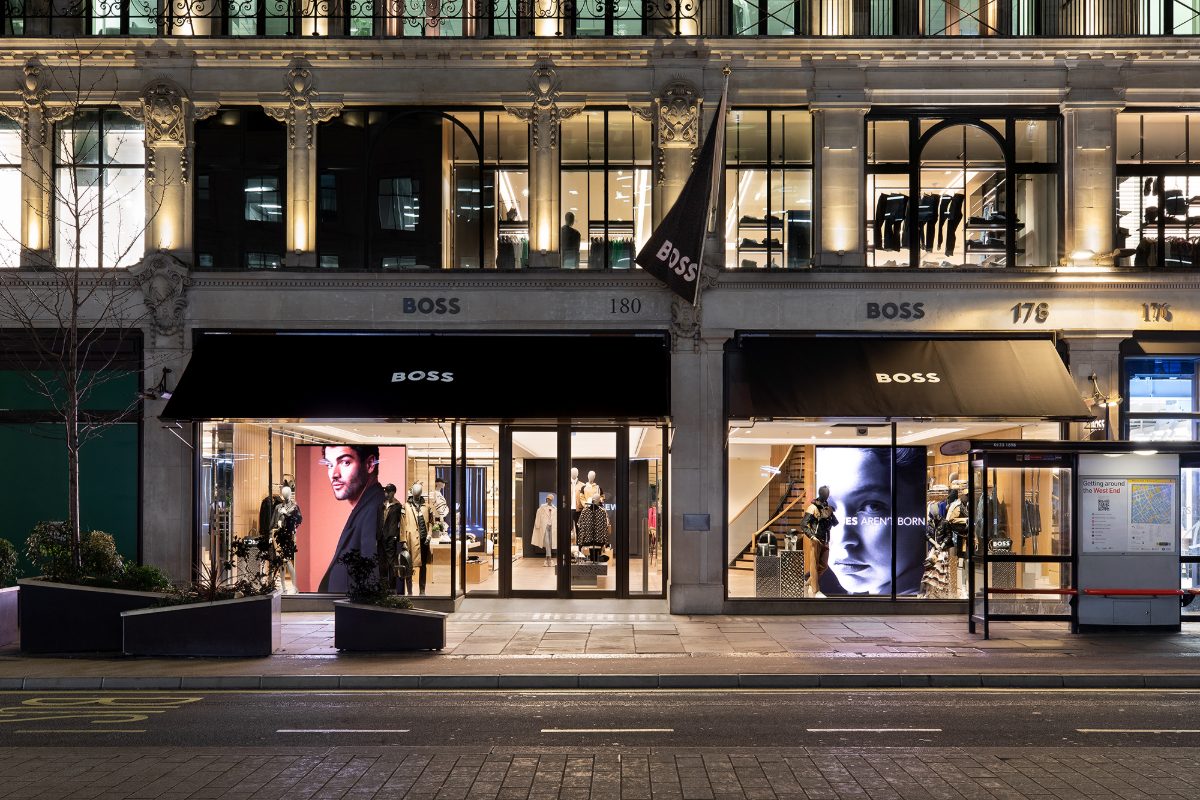
The Hugo Boss Story Takes a Turn
In a recent development, Hugo Boss, the renowned German fashion house, has found itself in a precarious position. Just days after Frasers Group, led by Mike Ashley, gained control of the brand, the luxury retailer has cut its sales and profit outlook, citing a "persistently subdued consumer environment."
This news has sent shockwaves through the industry, with analysts describing it as a blow to Frasers, a FTSE 250-listed retail group. Hugo Boss now expects to post full-year earnings between €250 million and €300 million, falling short of previous expectations.
"Our top-line performance reflected both the deliberate strategic realignment of our business and a persistently subdued consumer environment," said Daniel Grieder, Chief Executive of Hugo Boss. "With demand likely to remain volatile, we are adjusting our outlook to reflect the market reality."
Frasers' Pursuit and the Impact on Hugo Boss
Frasers' pursuit of Hugo Boss has been a long and arduous journey, with the group finally pushing its stake above 50% last week. This acquisition marks Frasers' ambitious move into the luxury retail market, alongside its ownership of Flannels, Harvey Nichols, and Sports Direct.
Michael Murray, Frasers' Chief Executive and Mike Ashley's son-in-law, was appointed Chairman of Hugo Boss' supervisory board. Analysts at RBC described Hugo Boss' worsening outlook as a "negative read for Frasers Group," indicating the challenges ahead for the retail giant.
A Changing Retail Landscape
The fashion industry is undergoing a significant transformation, with consumer demand shifting and the rise of e-commerce challenging traditional retail models. Hugo Boss' decision to invest in new technology, including artificial intelligence, has not been enough to counter these trends.
"I suspect that this financial outlook is deliberate of Ashley to devalue Boss to a point where he can capture the remaining shares on the cheap," commented one observer. "He's eating fashion brands left, right, and centre."
The Impact of Brand Image and Quality
Hugo Boss' brand image and quality have been subjects of debate. Some commenters noted the change in logo a few years ago, with the new 'BOSS' design in Arial font, as a sign of a "meh" attitude. Others pointed out the brand's shift towards bolder logos and installment payment options, which may have contributed to its decline.
"I buy clothes I like generally, most of which aren't designer. That being said, having a logo would not put me off if I think it would look good on me for a decent price or second hand," said one user, highlighting the importance of personal taste and value.
The Nazi Connection and Brand Reputation
One of the most intriguing aspects of Hugo Boss' story is its historical connection to the Nazis. The brand's founder, Hugo Ferdinand Boss, was an early supporter of Hitler and a member of the Nazi party. The company produced uniforms for the German army, utilizing slave labor during World War II.
"Every time I see Hugo Boss, I think of Nazi uniforms. It's crazy these brands still exist," commented one user. "Boss was a prominent Nazi, and every time I see a moron with that name across their chest, I cringe."
The Future of Hugo Boss
As Frasers Group takes control, the future of Hugo Boss hangs in the balance. The brand's ability to adapt to changing consumer trends and maintain its luxury image will be crucial. Frasers' ability to navigate the challenges of the retail industry and its impact on Hugo Boss remains to be seen.
"It is bad that people will lose jobs. But also: farewell, Nazi uniformer," said one commenter, summing up the complex emotions surrounding Hugo Boss' current situation.
The story of Hugo Boss serves as a reminder of the ever-shifting nature of the fashion industry and the impact of corporate takeovers on iconic brands.

